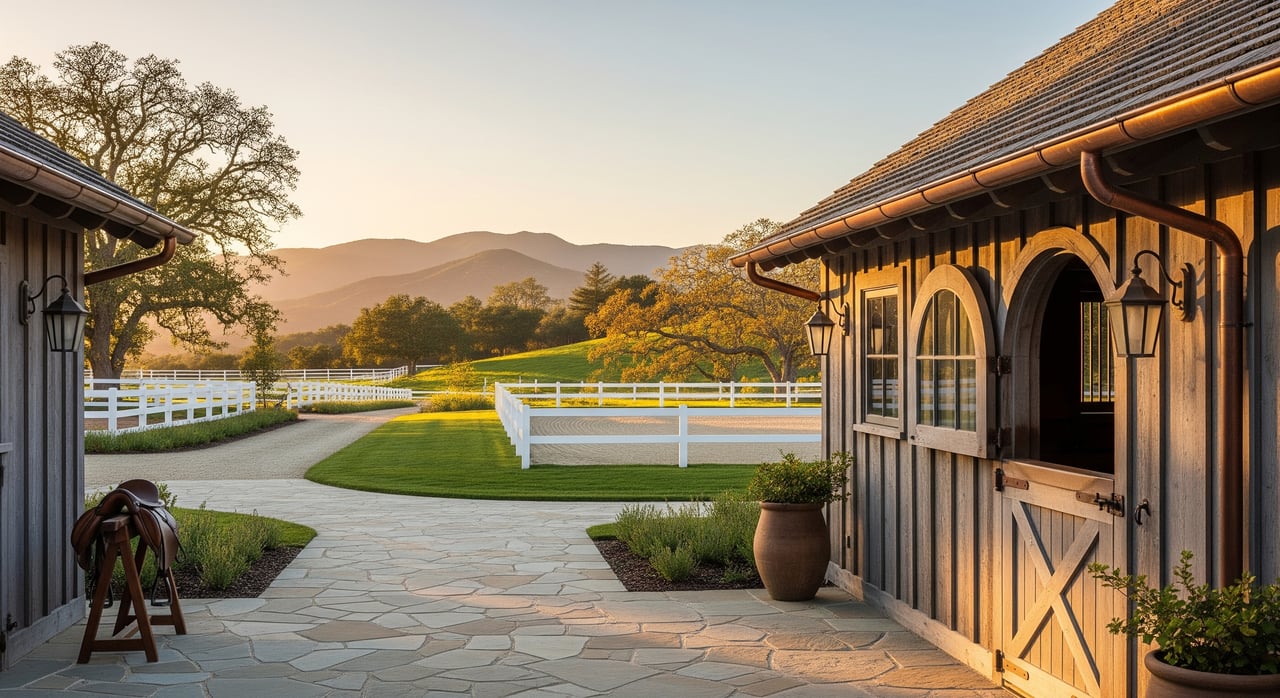
Is a “horse property” just land with a barn, or is there more to it? If you are looking in the Santa Ynez Valley, you want more than a label. You want daily function, safety, and a layout that supports your horses and your lifestyle. In this guide, you’ll learn the core features that truly define an equestrian-ready property here, plus local realities, measurements to use when touring, and a focused due diligence checklist. Let’s dive in.
Core features of equestrian-ready properties
Barns and stalls
A functional barn starts with safe, well-sized stalls. Most riding horses do well with 12×12 ft stalls, while 10×10 ft can work for smaller horses. Larger breeds or broodmares often need 12×16 ft. Look for solid partitions, secure latches, good ventilation, and natural light.
Plan for a dedicated tack room and dry, ventilated feed or hay storage. A wash area with reliable water is a major plus. If you plan to breed or bring horses in from off-site, a separate quarantine or foaling stall increases flexibility and safety.
Arenas and round pens
Quality arena footing and drainage matter more than size. Dressage arenas commonly measure 20×40 m or 20×60 m, but schooling arenas can be smaller if space is tight. Jumping arenas often need more square footage and deeper, well-compacted footing. A 50–60 ft round pen with secure panels and non-slip surface supports training and lunging.
Arena lighting, watering, and wind protection improve year-round use. After rain, a well-constructed arena should drain quickly without standing water.
Turnouts and pasture
Turnout design influences horse health and maintenance time. Provide safe, well-graded paddocks with run-in shelter and easy access to water and feed. As a rule of thumb, plan 1–2 acres per horse for exercise and turnout only, and 2–5 acres per horse if you expect pasture to supply most forage. In Santa Ynez, seasonal drought means you will likely rely on supplemental hay part of the year.
Fencing and gates
Choose safe, visible fencing such as wood or vinyl post-and-rail, or smooth pipe rail, typically 48–60 inches high. Avoid barbed wire and sharp edges. Gates should be wide enough for trailer access. A single-axle trailer may manage a 12–14 ft gate, while larger rigs often need more.
Footing and drainage
Well-built arenas use a compacted base, separation fabric, drainage layer, and a top layer like sand or a sand-fiber blend. Slight slope and perimeter drains help keep surfaces dry. Similar attention to drainage in paddocks and around barns prevents mud, odors, and hoof issues.
Trailer access and parking
Confirm the driveway and gates can handle your trailer’s turning radius. All-weather surfacing and good sightlines are important, especially on rural roads. On-site trailer parking and a safe turnaround reduce daily friction.
Utilities, water, and waste
Reliable water is nonnegotiable. Look for barn hydrants, troughs or automatic drinkers, and adequate electrical service for lighting and hot water. Plan where manure will be stored and how it will be hauled or composted. If you expect to convert or add structures, ensure septic capacity and permits align with your plans.
Nearby support services
Proximity to veterinarians, farriers, feed and hay suppliers, and training facilities supports smooth, year-round care. Shorter drive times often translate into better responsiveness for routine and emergency needs.
Santa Ynez realities that matter
Climate and forage
The Santa Ynez Valley has warm, dry summers and cooler, wetter winters. Rain is seasonal, so pasture productivity is limited. Expect to supplement with hay during late summer and plan for irrigation where possible. Adequate hay storage reduces mid-season supply stress.
Water supply and wells
Many rural parcels use private wells or shared systems. Verify well yield, depth, pump history, and water quality. Ask about storage tank capacity and any backup supply. Water availability varies by parcel, so confirm details before you write an offer.
Wildfire and defensible space
Wildfire risk is a fact of life in much of Santa Barbara County. You want defensible space around barns and hay storage, ember-resistant materials where possible, and safe access for emergency vehicles. Confirm whether there is a water source suitable for firefighting.
Zoning and permits
Zoning and permits shape what you can build and how you can use the property. Check barn and arena permits, setbacks, animal counts per acre, and whether commercial equine activities are allowed. If a parcel is under a conservation easement or Williamson Act contract, land use may be further limited.
Trails and riding access
Public and private trail access varies by location and easements. If trail riding is important, verify the legal status of any access and whether local rules allow crossings or hitching. Do not assume access based on proximity alone.
Environmental considerations
Parcels near streams or the Santa Ynez River may have additional manure management and runoff rules. Floodplain or riparian buffers can affect where you place barns, arenas, or composting areas.
Local support ecosystem
Solvang, Buellton, Santa Ynez, and Los Olivos offer a strong base of equine services. Specialty care often involves trips to larger hubs. Consider drive time to vets, farriers, and feed suppliers as part of your site selection.
Practical specs and measurements to use
- Stall sizes: 12×12 ft for most riding horses, 10×10 ft for smaller horses, 12×16 ft for broodmares or larger breeds.
- Barn aisles: 10–12 ft wide for safe movement and equipment access.
- Ceiling height: at least 9–12 ft for ventilation and safety.
- Dressage arenas: 20×40 m or 20×60 m; prioritize footing quality and drainage.
- Round pen: 50–60 ft diameter with non-slip surface and secure panels.
- Fencing: 48–60 in high, visible materials, no barbed wire; add visibility tape if using wire or electric.
- Gates: 12–14 ft minimum for smaller trailers, wider for larger rigs.
- Water points: hydrants at barns, wash racks, and near paddocks; plan for algae control in summer.
- Electrical: LED lighting, GFCI outlets, separate circuits for tack areas and arena lights.
- Manure: dedicated storage or compost bays, and a plan for haul-away.
Due diligence checklist in escrow
Structures and site
- Inspect barn roof, beams, stall floors, ventilation, and drainage.
- Evaluate arena footing depth, composition, and drainage. If recently built, ask for installer details.
- Walk fencing and gates. Check post set, latch safety, and gate widths.
- Confirm driveway surfacing and trailer turnarounds.
Water systems
- Review well logs, recent pump tests, production rate, and water quality.
- Note storage tank size and any shared water agreements.
Permits and land-use
- Verify zoning, allowed animal counts, setbacks, and recorded permits for barns and arenas.
- Ask about any unpermitted structures that could impact financing or insurance.
- Check for conservation easements or Williamson Act status.
Fire and environmental
- Confirm defensible space and fire-safe clearance around barns and hay storage.
- Ask about cisterns or hydrants usable by fire agencies.
- Review floodplain or riparian maps if near waterways.
Services and operations
- Confirm distance and typical response times for equine vets and farriers.
- Identify local feed and hay suppliers and current delivery schedules.
Insurance and costs
- Discuss homeowner’s and farm liability coverage for equine use.
- Budget for arena maintenance or resurfacing, fencing repairs, well upgrades, irrigation, and manure management.
How many acres do you really need?
Your acreage needs depend on pasture quality and how you manage turnout and forage. Plan for 1–2 acres per horse for exercise and mental health if you supply hay separately. If you want pasture to cover a significant share of forage, expect 2–5 acres per horse. In Santa Ynez, plan conservatively due to seasonal drought and variable pasture growth.
Hidden costs and smart budgeting
Set aside reserves for the items buyers most often underestimate. Fencing repairs and gate upgrades add up quickly. Arena resurfacing and watering systems require ongoing care. You may need well improvements, additional storage tanks, or irrigation controls. Wildfire mitigation around barns and hay storage is an annual line item. Hay purchases typically rise during late summer and drought years.
Quick showing-day checklist
- Barn: Stall size, airflow, safe latches, wash rack, tack and feed rooms.
- Arena: Footing quality, drainage after rain, lighting, and wind protection.
- Turnouts: Shelter, slope, footing, water access, and safe gates.
- Fencing: Visibility, height, condition, and gate widths for your rig.
- Water: Well test data, storage capacity, hydrants near use areas.
- Access: Driveway surface and trailer turnaround space.
- Fire safety: Defensible space, roof materials, and emergency access.
- Paperwork: Permits for structures and any animal-use limits.
Work with a local advocate
Finding the right equestrian property in Santa Ynez is about fit and function as much as acreage. You deserve guidance that blends local land-use knowledge with the day-to-day realities of horsekeeping. If you want a thoughtful, private search that targets properties built to work for you and your horses, connect with Tiffany Mills for buyer representation and off-market access.
FAQs
What makes a property “equestrian-ready” in Santa Ynez?
- A safe, functional setup that typically includes properly sized stalls, quality arena footing and drainage, safe fencing and gates, reliable water and power, manure management, and practical trailer access, all aligned with local climate and land-use rules.
How do I evaluate barn stall size and layout during a tour?
- Look for 12×12 ft stalls for most riding horses, 10×10 ft for smaller horses, and 12×16 ft for broodmares or large breeds, along with 10–12 ft aisles, good ventilation, and secure hardware.
Are private wells sufficient for keeping horses in the valley?
- Yes, private wells are common, but you should verify yield, depth, pump history, water quality, and storage capacity, and consider backup storage or shared systems where available.
Are barns and arenas subject to county permits in Santa Ynez?
- Yes, zoning and building permits apply to barns and arenas, and commercial equine activities often have additional requirements, so verify zoning, setbacks, and recorded permits early.
How many acres per horse should I plan for here?
- Plan 1–2 acres per horse for turnout if you provide hay, and 2–5 acres per horse if you expect pasture to supply forage, planning conservatively due to seasonal drought.
What are the most common surprise costs for new horse-property owners?
- Fencing and gate upgrades, arena resurfacing and watering, well or storage-tank improvements, increased insurance, hay during drought, and wildfire mitigation around barns and hay storage.
How can I confirm legal trail access from a specific parcel?
- Ask for recorded easements and local rules, and do not rely on proximity alone, since public and private trail permissions vary by location and landowner agreements.